
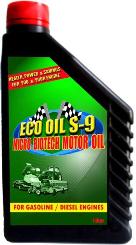
The department on Energy also tested free glycerin at 0,02 (% mass) based on AOCS Ea6-51 and total glycerin at 1,06 (% mass) based on AOCS Ca 14-56.
Other observable physical properties:
> color: clear to light yellow
> Heavier than most commercially available engine oils
> Blends well with other engine oils when agitated but separates again, after some time, after agitation
_________________________________________________________
MATERIALS SAFETY DATA SHEET
COCONUT ENGINE OIL
Date Issued: 10 January 2008
- CHEMICAL PRODUCT/COMPANY IDENTIFICATION
Product Name: Fresh Coconut Micro-Biotech Engine Oil
Trade Name: S-9 Micro-Biotech Engine Oil
Producer: Chun Hae Food Processor, Matina Pangi, Davao City, Philippines
Tel.
No. 63 (082) 3015141
Fax
No. 63 (082) 3004855
- COMPOSITION/INFORMATION ON INGREDIENTS
INCI Name: Coconut Oil (Cocos Nucifera)
CAS Number: 8001-31-8
Chemical Description: Fatty Acid Triglyceride
Substance Presenting Health Hazard: None
- HAZARD IDENTIFICATION
- Environmental
Hazards: None expected subject to proper use and handling.
- Human Health
Hazards: None expected subject to proper use and handling.
- FIRST AID MEASURES
Effects and Symptoms
Ingestion:
Not considered dangerous.
Inhalation:
Not considered dangerous.
Skin
Contact: Not irritating.
Eye
Contact: May cause irritation.
First Aid Measures
Ingestion:
Not a direct hazard.
Inhalation:
No vapors at normal working temperatures.
Skin
Contact: Not a direct hazard.
Eye
Contact: Flush with water for 15-20 minutes. If irritation continues,
Consult
a doctor.
- FIRE FIGHTING MEASURES
Suitable Extinguishing Media: Dry powder, foam, carbon dioxide.
Unsuitable Extinguishing Media: Water jet, but use water to cool down fire
exposed
containers; Disperse vapors and flush spills
away from fires.
Protection of Firefighters: Wear NIOSH approved self-contained breathing
apparatus and other protective clothing to prevent contact
with skin and eyes.
Unusual Fire and Explosion Hazards: Emits toxic fumes under fire conditions.
- ACCIDENTAL RELEASE MEASURES
Personal Precautions: Watch out for slippery conditions during spillages.
Wear protective
equipment. Avoid contact with eyes.
Environmental Precautions: Keep away from drains and ground water.
Methods of Cleaning Up: Absorb with non-combustible absorbent and place
in close
containers for disposal. Ventilate area and wash spill
site after material pick up is complete.
- HANDLING AND STORAGE
Handling: Handle with care and avoid spillage on floor to prevent slippery
conditions.
Measures for Safety Handling: Consider normal working hygiene. Keep
away from
sources of ignition.
Storage: Store in cool dry place. Keep away from heat.
Suitable Packing Materials: Coated steel drums, plastic containers, dark
glass.
Non-suitable Packing Materials: Direct contact with iron, bronze or copper.
- EXPOSURE CONTROL/PERSONAL PROTECTION
Ventilation: Efficient mechanical exhaust system is recommended.
Respiratory Protection: No special measures at normal room temperature.
Hand Protection: Use impervious gloves.
Eye Protection: Use of safety glasses/goggles is recommended.
Skin Protection: Use of impervious apron is recommended.
- PHYSICAL AND CHEMICAL PROPERTIES
Color: Amber
Physical State: Liquid or gel at room temperature.
Odor: Characteristic of coconut.
pH: 7
Melting Point: 23-27C
Solubility: Insoluble in water.
Autoinflammability: Not possible.
Explosive Properties: Not explosive.
Viscosity: 27.37 cSt@40C
Boiling Point: NA
Flashpoint: 256C
- STABILITY AND REACTIVITY
Chemical Stability: Stable under normal ambient and anticipated storage
and handling
conditions of temperature and pressure.
Materials to Avoid: Strong oxidizing agents.
Hazardous Decomposition Products: Only through thermal decomposition-H2O
and CO2.
- TOXICOLOGY INFORMATION
Product is considered non-toxic.
Acute Toxicity: Oral (LD 50) – Not tested on animals.
Inhalation
(LC 50) – Not expected.
Skin
Irritation – None
Eye
Irritation – Slightly irritant.
Sensitation – NA
Chronic
Toxicity – Not expected.
- ECOLOGICAL INFORMATION
Ecotoxicity: NA
Elimination (persistency and degradability): Easily biodegradable.
Bioaccumulative Potential: NA
Based on Chemical Composition: No heavy metals and substances classified
as dangerous to the environment.
- DISPOSAL CONSIDERATIONS
Product: Dispose of in accordance with local regulations. This material
is not considered
hazardous waste.
Contaminated Packaging: Dispose of in suitable waste disposal sites approved
by local
authorities.
- TRANSPORT INFORMATION
This product is not a hazardous material.
- REGULATORY INFORMATION
According to available information, this product is not dangerous.
Symbols/Phrases According to Health Hazards: None
Dangerous Substances to Label: None
- OTHER INFORMATION
This information is given in good faith and based on our current knowledge of the product. The above information does not claim characteristics of the product in terms of legal claims of performance/guarantee. This information only describes safety measures and no liability may arise from the use or application of the product described herein.